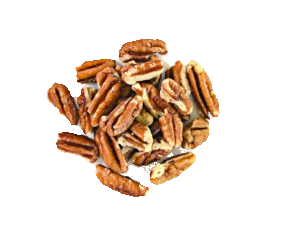
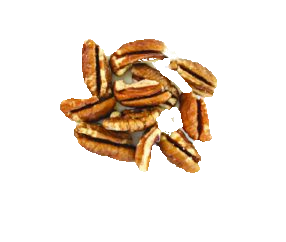
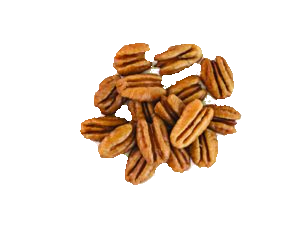
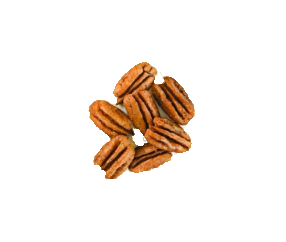
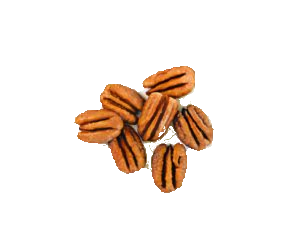
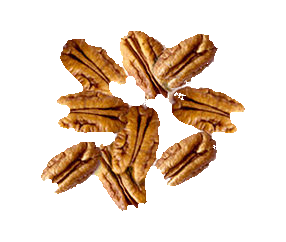
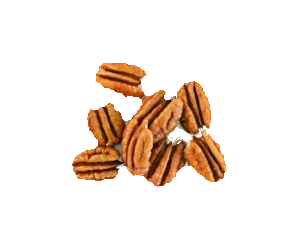
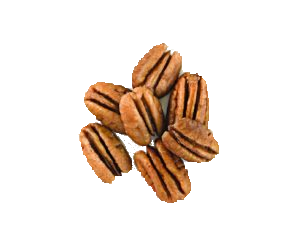
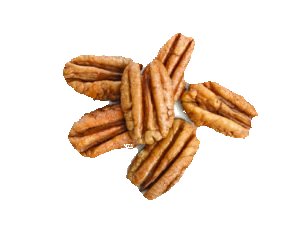
The history of the pecan traces back to the 16th century and is the only major tree nut that is native to North America. The name “pecan” is a Native American word of Algonquin origin that was used to describe “all nuts requiring a stone to crack”. It is said they were the first to cultivate the pecan tree. Pecans were favored by people because they were grown next to waterways, easier to shell and for their great taste.
The first U.S. pecan planting took place in New York in 1772 and stretched from the northern range to the Eastern portion of the Atlantic Seaboard. They were also said to be planted in the gardens of George
Washington and Thomas Jefferson. In the late 1770’s the economic potential of the pecans was realized
by the French and Spanish colonists settling along the Gulf of Mexico. By 1802, the French were exporting pecans to the West Indies and soon became an item of commerce for the American colonists and the pecan industry was born.
In 1822, Abner Landrum of South Carolina discovered a pecan budding technique, however this invention was lost or over looked until 1876 when an African-American slave gardener from Louisiana, Antoine, successfully propagated pecans by grafting a superior wild pecan to seedling pecan stocks. It was named “Centennial” after winning the Best Pecan Exhibited award at the Philadelphia Centennial Exposition in 1876. The successful use of grafting techniques led to grafted orchards of superior genotypes and proved to be a milestone for the pecan industry. In the 1880’s Louisiana and Texas nurserymen learned of the pecan grafting and began propagation on a commercial level, which led to a booming pecan growing and shelling industry.
Large, elongated, thin shell, rich flavor kernel, Heavy producer. Self-fertile but will produce more if pollinized with late pollen shedding variety such as Wichita, Bears at young age. Most popular pecan for arid, wester climates.
Ripens: November
Mature height is 70-100 feet with a spread of 30 feel. Usually kept lower by commercial pruning. Cold hardly to U.S.D.A Zone 7.
Medium, Long sharply pointed at both ends, good flavor. Soft shell.
Recommended for Arid climates from Central Texas to West Coast. Pollinizer required. late pollen shedding. Large tree and good for landscaping.
Ripens: November
Cold hardly to U.S.D.A zone 7.
The Money maker is harvested in Mid-October and November. The count ranges from 63-72 and kernel yield is normally 43 – 46%.
The Desirable larger in size than most varieties in Georgia. This pecan is preferably used in the United States specialty markets (fundraising & gift packing). The count ranges from 47 – 54 per pound and the kernel yield is normally 50-53%. The Desirable harvest begins in Mid-October and runs through December with the majority of shipments in the month of November.
The Sumner is harvested in November with minimal deliveries in December. The typical count ranges from 50-60 per pound and kernel yield is normally 51-54%.
The Cape Fear is harvested in November with minimal deliveries in December. The Count ranges from 51-57 per pound and the kernel yield is normally 50-54%.
The Stuart Blend is the most prevalent variety in the state of Georgia. The Stuart Blend will count between 55 – 63 per pound and have a kernel yield of 45 – 49%. This variety is harvested in late October through December with the majority of shipments in the month of November.
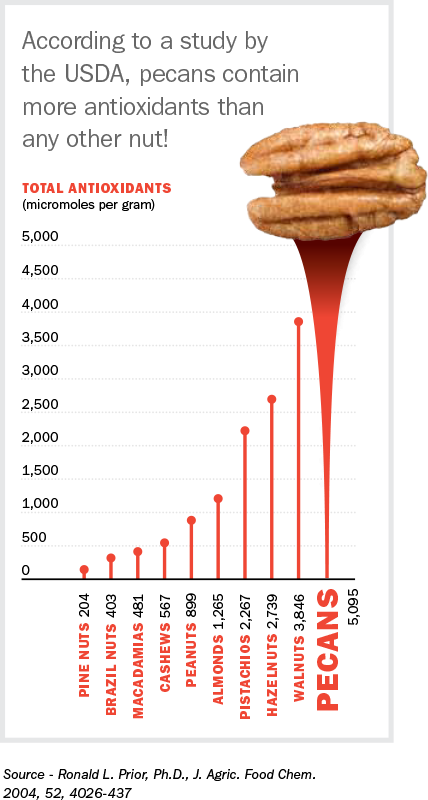
A laboratory analysis and comparison of the antioxidant power of 100 foods completed by the U.S. Department of Agriculture found that pecans ranked among the top 20 foods of antioxidant capacity. The study also found that pecans have the highest amount of antioxidants of the nuts tested, including almonds and walnuts. The antioxidant compounds found naturally in pecans, including vitamin E, ellagic acid and flavonoids, are believed to help prevent disease-causing oxidation in cells. Such oxidative damage has been linked to developing a wide variety of diseases including heart disease, cancer, and Alzheimer’s Disease.
While eating pecans and other nuts cannot cure high blood pressure, they are an important part of the recommended eating plans of the National Institutes of Health as well as the U.S. Dietary Guidelines for healthy eating issued by the Department of Health and Human Services and the Department of Agriculture. They recommend four to five servings (1 ½ ounces per serving) of pecans a week. Research has shown that following these diets is an effective way to lower blood pressure, while supercharging your diet with much needed nutrients.
Researchers from Loma Linda University in California and New Mexico State University have confirmed that when pecans are part of the daily diet, levels of cholesterol in the blood drop. Pecans get their cholesterol-lowering ability from both the type of fat they contain and the presence of beta-sitosterol, a natural cholesterol-lowering compound. Eating 1 ½ ounces of pecans a day (27 to 30 pecan halves), as part of a heart-healthy diet, can reduce the risk of heart disease.