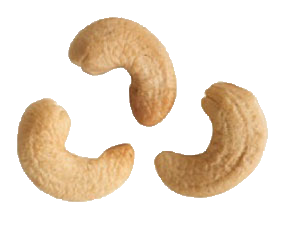
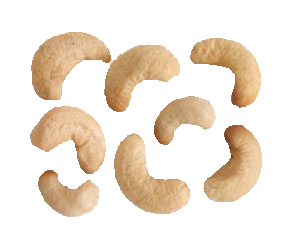
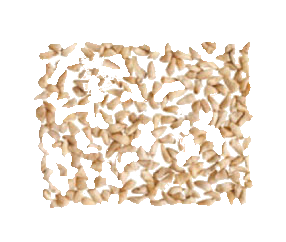
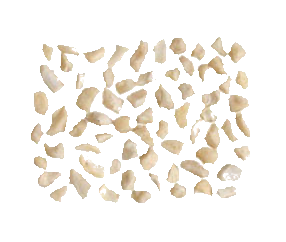
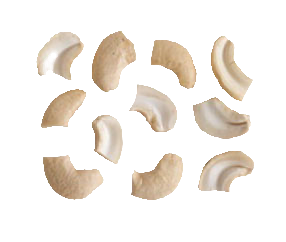
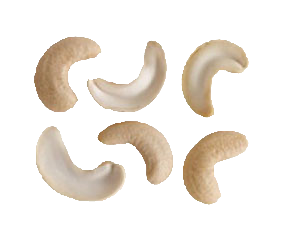
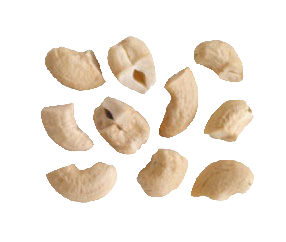
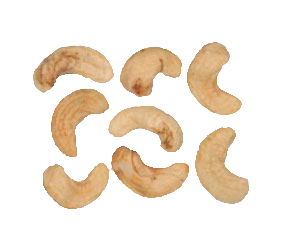
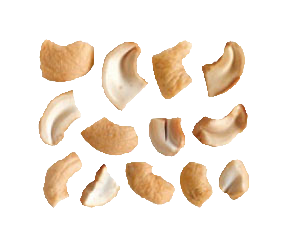
The cashew is native to Brazil. One of the first regions it was seen was in the State of Maranhao in Northern Brazil and was discovered by Portuguese colonists in 1578. Portuguese missionaries took it to East Africa and India during the late 16th century. The English name of Cashew is derived from the Portuguese name of a similar pronunciation ‘caju’ which comes from the Tupi-Indian word ‘acaju’ meaning ‘nut’. After India it was introduced to South-Eastern Asia and spread to Australia and some parts of the North American Continent through Portugal’s spice trade outposts.
Small Quantities of Cashew Kernels were imported as early as 1905 to the United States, however world trade did not start until the representatives of the General Food Corporation discovered the nuts during their mission to India in the early 1920’s.
Unlike most nuts, the cashew nut hangs from the bottom of a cashew “apple”, essentially a swollen stem. Fresh cashew apples taste delicious, however only people living near cashew orchards get to enjoy this delicate fruit. Cashew apples begin to ferment immediately after they are picked and barely last 24 hours. Locally, cashew apples can sometimes be found canned in jam or as the base of a liqueur.
The hard shell incasing the cashew nut is made of two layers. A resin lies between the shell and the nut itself that must be handled with care. The cashew tree is related to poison ivy and poison sumac, therefore the resin can cause an allergic reaction that will blister human skin upon contact.
Cashew grows on the end of a swollen "pseudo-fruit" that contains a delicious juice with a lot of medicinal value.
The shell of the cashew nut has a caustic resin that can be used in industry as well as is, or heated to produce a less caustic, and effective chemical known as cardanol to treat conditions such as cancer.
Cashew nuts are popular worldwide and offer significant nutritional value.
The leaves contain a high amout of antioxidants as well as tannins which can be used to treat a huge variety of conditions.
The bark contains similar compounds to the leaves, and has been used for diabetes, and high blood pressure.